



|
Name |
MECCHA CHAMELEON |
|---|---|
|
Category |
Puzzle |
|
Developer |
Shakila developer |
| Last version | 1.6 |
|
Updated |
|
|
Compatible with |
Android 7.1+ |
Table of Contents
1 Information of MECCHA CHAMELEON2 What is MECCHA CHAMELEON APK?3 Main Features3.1 Painting and Environmental Camouflage3.2 Hider and Seeker Roles3.3 Colorful Maps and Social Matches4 How the Gameplay Works4.1 Choosing and Preparing a Hiding Position4.2 Searching for Camouflaged Players4.3 Learning Through Repeated Rounds5 Multiplayer Strategy and Player Interaction6 Advantages and Limitations6.1 Where the Game Works Well6.2 Things to Keep in Mind
What is MECCHA CHAMELEON APK?
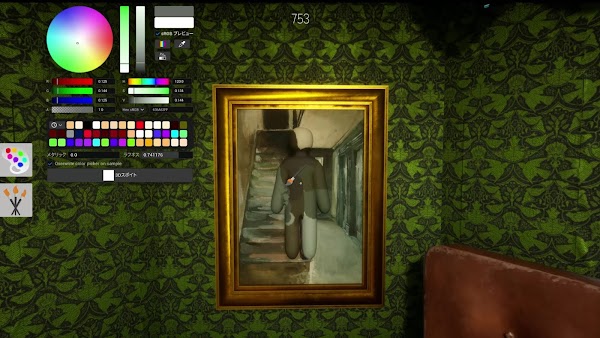
MECCHA CHAMELEON APK is a hide-and-seek game built around camouflage, observation, and creative positioning. Instead of hiding behind objects in the usual way, players can paint their characters so their bodies visually match walls, floors, decorations, and other parts of the stage.
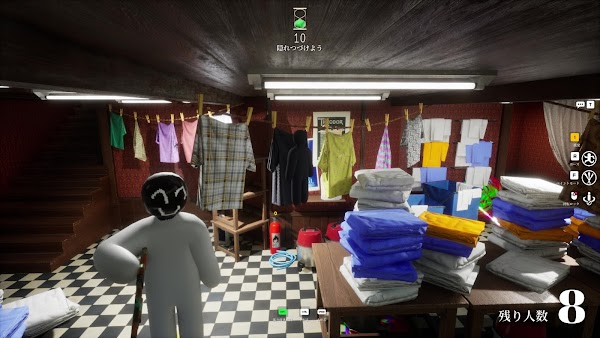
The main challenge comes from convincing another player that your character is part of the environment. Choosing a good location is important, but color matching, body position, timing, and the surrounding visual pattern can be equally important. A hiding place that looks convincing from one direction may become obvious when a seeker approaches from another angle.
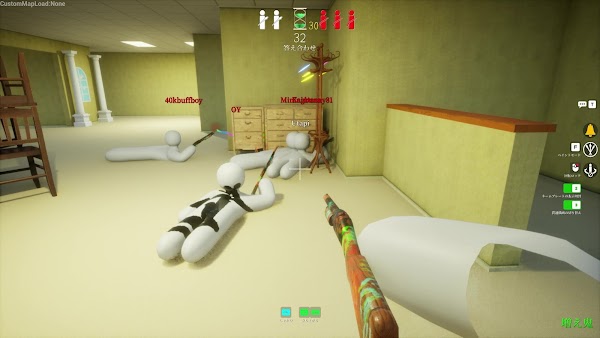
Matches divide players between hiding and searching roles. Hiders use painting and positioning techniques to avoid detection, while seekers inspect the stage for unusual silhouettes, movement, color differences, or objects that seem slightly out of place. This simple idea creates rounds where careful observation can matter as much as quick reactions.
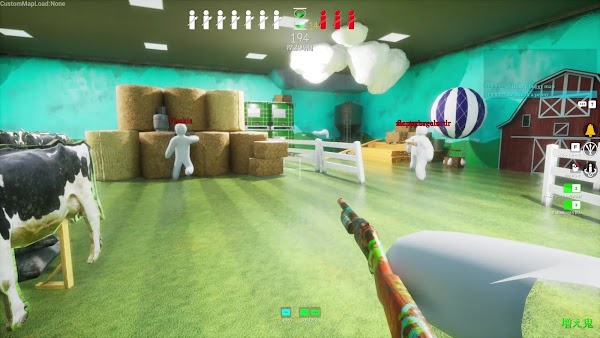
The colorful presentation also supports the camouflage mechanic. Stages contain varied surfaces and visual details that give players many possible ways to disguise themselves, making each environment part of the gameplay rather than a simple background.
Main Features
Painting and Environmental Camouflage
The defining mechanic is the ability to paint the character and imitate nearby surfaces. Players begin with a visually noticeable body, then use colors from the stage to reduce the contrast between themselves and the environment.
Good camouflage depends on more than selecting a similar color. The surrounding texture, lighting, character outline, viewing angle, and pose can all influence whether a disguise looks believable. A player standing against a matching wall may still be easy to identify if the silhouette creates an unnatural shape.
- Match character colors with nearby surfaces.
- Use walls, floors, props, and environmental details as camouflage.
- Adjust positioning to make the character silhouette less noticeable.
- Look for locations where surrounding shapes help hide the body.
Hider and Seeker Roles
The two roles encourage very different ways of thinking. Hiders study the environment and decide where they can disappear visually. They need to consider where seekers are likely to look, how exposed the hiding position is, and whether changing position is worth the risk.
Seekers approach the same stage as an observation puzzle. Rather than searching only conventional hiding places, they need to examine surfaces for visual inconsistencies. Slight movement, an unusual outline, a mismatched patch of color, or an object positioned strangely can reveal a hidden player.
Because both sides understand the camouflage mechanic, each round becomes a contest of prediction. Experienced hiders can deliberately choose unexpected locations, while experienced seekers learn to recognize the visual tricks commonly used to disappear into a stage.
Advertisement
Colorful Maps and Social Matches
Bright environments provide plenty of surfaces for camouflage. Different colors, decorative objects, corners, patterns, and structures give hiders multiple possibilities instead of forcing everyone toward the same locations.
The multiplayer format also creates plenty of unpredictable moments. A disguise that seems obvious can occasionally fool several seekers, while a carefully prepared hiding spot can fail immediately because someone notices one tiny detail. Public matches allow these situations to develop differently depending on the players involved.
How the Gameplay Works
Choosing and Preparing a Hiding Position
For a hider, preparation begins by reading the stage. Picking the final location before concentrating on paint can make the process easier because the character can then be matched specifically to that surface.
A strong hiding location usually combines several factors. The color should be suitable for blending, the character should fit naturally into the surrounding shapes, and the position should avoid drawing attention. Remaining still at the right moment can also prevent a seeker from noticing movement.
Pose and orientation add another layer. Turning the character or positioning the body against a nearby object can reduce recognizable human-like shapes. This means two players using the same wall can achieve very different results depending on how they position themselves.
Searching for Camouflaged Players
Seekers need to scan environments differently from hiders. Searching every surface individually can be inefficient, so recognizing unusual visual patterns becomes useful. An extra shape, slightly different shading, movement in a static area, or an unnatural silhouette can indicate that someone is hiding there.
Looking at the same location from several angles can also reveal disguises that work only from one viewpoint. Large open areas can be checked quickly before attention moves toward corners, decorative structures, and surfaces with complex visual patterns.
This creates a satisfying learning curve. New players can understand the basic objective quickly, while repeated matches gradually teach more advanced habits involving positioning, visual deception, map knowledge, and prediction.
Learning Through Repeated Rounds
MECCHA CHAMELEON rewards experimentation because successful techniques are strongly influenced by the current environment and the behavior of other players. A hiding place that worked in one match may attract immediate attention in the next if opponents remember it.
Players can therefore improve by changing their approach instead of relying on a single trick. Studying which surfaces are frequently ignored, identifying strong viewing angles, and learning when movement is too risky can gradually make camouflage more convincing.
Multiplayer Strategy and Player Interaction
MECCHA CHAMELEON supports public multiplayer matches, making human behavior an important part of the challenge. Real opponents are less predictable than scripted search patterns, so both teams need to adapt while a match is underway.
Advertisement
For hiders, deception can be as important as accurate color matching. An unconventional position may succeed because seekers expect everyone to use obvious corners. Conversely, a visually convincing spot can become weak if several players repeatedly use the same area.
Seekers benefit from learning common hiding habits without becoming dependent on them. Checking familiar locations is useful, but successful searching also requires noticing anything that breaks the visual rhythm of the environment.
- Observation: Small visual differences can reveal a disguised player.
- Prediction: Anticipating where another player would choose to hide narrows the search area.
- Positioning: Hiders need locations that conceal both color and silhouette.
- Timing: Moving at the wrong moment can expose an otherwise convincing disguise.
- Adaptation: Repeating the same tactic makes it easier for returning opponents to recognize it.
The result is a party-game structure that can produce both tense and humorous situations. A seeker may repeatedly inspect an area while overlooking someone nearby, while a hider can suddenly be exposed by a tiny movement or an imperfect color match.
Advantages and Limitations
Where the Game Works Well
The camouflage system gives MECCHA CHAMELEON a clear identity among multiplayer hide-and-seek games. Painting the character adds an active preparation stage, so hiding involves making decisions rather than simply locating an obscure corner.
The concept is also easy to understand. New players can quickly recognize the basic relationship between painting, hiding, and searching, while experienced players have room to improve through map knowledge, better positioning, creative poses, and closer observation.
Players who like social party games, stealth mechanics, visual puzzles, or short competitive matches may find the format especially appealing. The changing behavior of human opponents helps prevent every round from following exactly the same pattern.
Things to Keep in Mind
The effectiveness of camouflage depends heavily on other players. Some opponents may overlook simple hiding positions, while attentive seekers can quickly expose small visual mistakes. This makes individual rounds naturally inconsistent in difficulty.
The gameplay also favors players who pay attention to environmental details. Someone looking for constant action may find the preparation and observation phases slower than conventional competitive games. For players who enjoy deception and visual problem-solving, however, those quieter moments are an important part of the tension.
Repeated play can also make familiar hiding locations easier to recognize. Successful players need to vary their positions, painting choices, and strategies instead of depending on the same location every round.
FAQs MECCHA CHAMELEON
What is MECCHA CHAMELEON APK?
+
MECCHA CHAMELEON APK is a multiplayer hide-and-seek game where players use color-based camouflage to blend into the environment and avoid being found.
How does camouflage work in MECCHA CHAMELEON APK?
+
Players can adjust their character colors to match nearby surfaces, making it harder for Seekers to identify them during a match.
Can I play MECCHA CHAMELEON APK with friends?
+
Yes. The game supports private rooms and online multiplayer matches, allowing friends to join the same session and compete together.
Is MECCHA CHAMELEON APK beginner-friendly?
+
Yes. The controls are simple, the rules are easy to understand, and most players can learn the core mechanics within a few matches.
Who should play MECCHA CHAMELEON APK?
+
The game is suitable for players who enjoy party games, social multiplayer experiences, creative hiding strategies, and observation-based challenges.
Discover More Interesting Games
-
 Mod
Slugterra: Slug it Out 2
v6.7.3
753.50 Mb
Updated -
Mod
Clockmaker
v106.1.1
204.12 Mb
Updated -
Ragini Is Back : Horror Escape
v8
99.00 Mb
Updated -
Angry Birds Dream Blast
v2.11.0
221.56 Mb
Updated -
Mod
Royal Kingdom
v34392
226.00 Mb
Updated -
Mod
Travel Town
v2.12.1792
182.19 Mb
Updated -
Mod
Fill The Fridge
v73.1.0
706.81 Mb
Updated -
Mod
Magic Sort!
v0.0.3309
234.22 Mb
Updated -
Mod
Block Blast
v10.8.6
224.86 Mb
Updated -
Mod
Foodie Sizzle
v2.0.52
542.40 Mb
Updated









Share Your Thoughts